
A Few Portuguese Words That Matter. (From Someone Who Is Still Terrible at Saying Them)
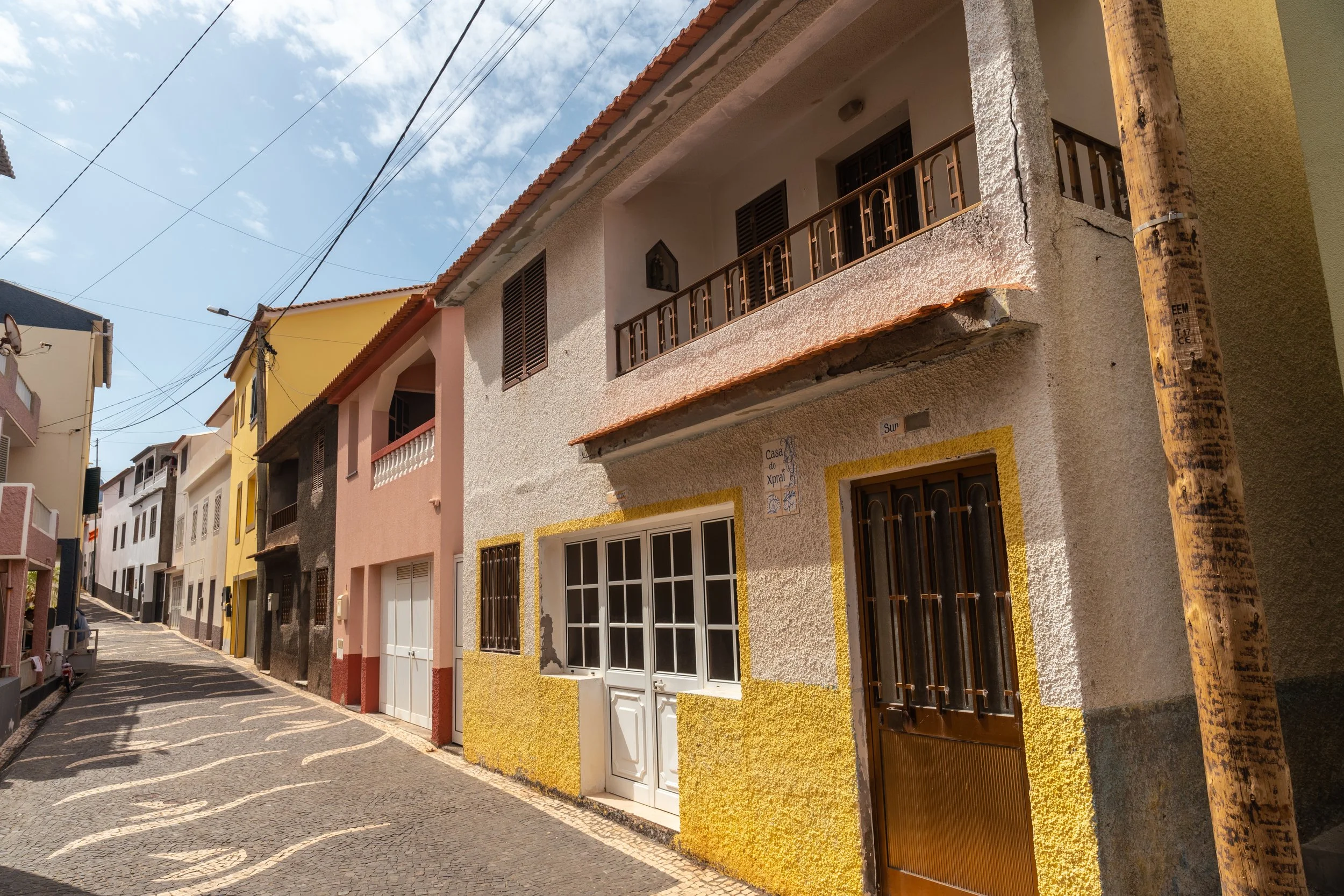
A local street in Paul do Mar.
Let’s get this out of the way early, you do not need to speak Portuguese well to survive in Madeira.
You do, however, need to try.
Let’s be clear from the start, I am not naturally good at speaking languages.
I can read Portuguese, I am getting better at writing it, put it in front of me on paper and I’m fine, ask me to say it out loud and something short-circuits.
I know the words, I hesitate on the pronunciation. My confidence disappears somewhere between say it slowly and don’t embarrass yourself.
And yet, every single time I try, it’s appreciated.
That’s the part people miss about Madeira.
Fluency isn’t the expectation.
Effort is.
So rather than a full phrasebook or a language lesson, these are just a few words and phrases that come up again and again in daily life here, the ones that actually change how interactions feel.
Said imperfectly, slowly, and with good intentions. Some polite. Some very much not.
The words…
“Bom dia” (bohm dee-ah)
Good morning
This one matters more than anything else.
Say it before you ask for anything.
Before coffee.
Before directions.
Before English arrives.
Skip it, and the interaction feels transactional.
Use it, and things soften immediately.
“Boa tarde” (boh-ah tar-deh) / “Boa noite” (boh-ah noy-teh)
Good afternoon / Good evening
I still pause every time.
Is it too early?
Too late?
Have I crossed some invisible line?
No one corrects you.
They just register the attempt.
“Por favor” (por fa-vor)
Please
It’s a small word.
It does a lot of work.
“Obrigada” (oh-bree-gah-dah) / “Obrigado” (oh-bree-gah-doh)
Thank you
(Women say obrigada, men say obrigado)
Used constantly.
Always appreciated.
“Desculpe” (desh-kool-peh)
Sorry / Excuse me
Used constantly.
Quietly.
Without drama.
A few phrases I actually use…
“Quanto custa?” (kwan-toh koos-tah)
How much does it cost?
Simple. Direct.
Markets, cafés, taxis — you’ll use this all the time.
“Pode ser.” (poh-deh seh)
That’s fine / That works / OK
Incredibly useful.
Non-committal in the best way.
I use this daily.
“Está tudo bem.” (esh-tah too-doh behng)
It’s all good / Everything’s fine
Reassuring.
Often used to gently close a conversation.
“Obrigado / Obrigada, está tudo bem.”
(oh-bree-gah-doh / oh-bree-gah-dah, esh-tah too-doh behng)
Thank you, it’s all good
A polite way to decline help or say you’re fine without over-explaining.
“Não faz mal.” (now fahz mahl)
No problem / It doesn’t matter
Used constantly.
Dropped something? Small mistake?
This one smooths everything over.
Now, the ones you won’t find in the polite section of a phrasebook.
“Merda” (mehr-dah)
Shit
It covers a lot.
You’ll work it out quickly
“Foda-se” (foh-dah-seh)
For fuck’s sake / Oh well / Are you serious?
The island’s emotional punctuation.
You’ll hear it in traffic.
At the weather.
At life.
Usually muttered.
Rarely aggressive.
Almost philosophical.
“Caralho” (car-al-ho / kah-rah-lyoo)
Fuck / Bloody hell / Damn
This one has weight.
You’ll hear caralho in traffic.
At the weather.
When local guys get together for a bit of gossip.
What I’ve learned, despite my accent, my hesitation, and the occasional massacre of perfectly good Portuguese, is that locals here genuinely appreciate the effort.
They’ll wait.
They’ll help.
They’ll often switch to English after you’ve tried.
The difference is noticed.
So yes, I’m looking at proper Portuguese lessons this summer, Speaking included. No hiding this time.
I can read it, I am getting better at writing, Saying it out loud is where confidence goes to die.
It’s pretty embarrassing, really, living here while my kids are all fluent, and my partner, of course, is from here. I understand everything and still hesitate when it’s my turn to speak.
But I’m ready for it.
Because living here has taught me that perfection isn’t the point. Effort is. The locals notice it, they appreciate it, and they meet you halfway, even when your pronunciation is hanging on by a thread.
And when I get it wrong (which I will), I’ll probably mutter “foda-se”, laugh at myself, and carry on.
Which, honestly, feels like progress.
Kellie xoxo
